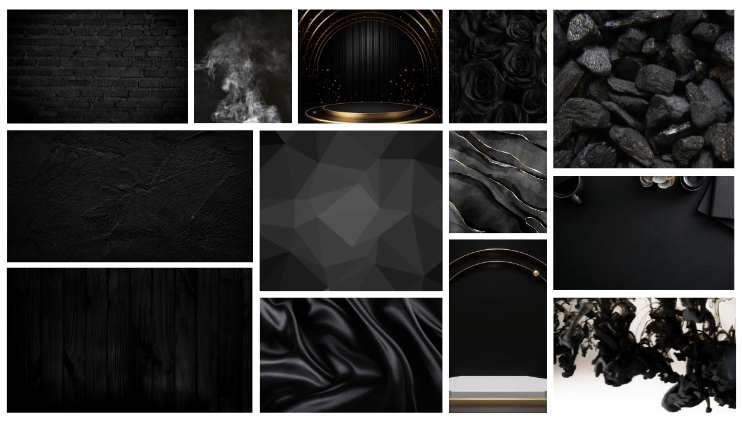
In the vast canvas of colors that paint our world, there exists one colour that commands attention like no other – black. It’s a colour that transcends trends, cultures, and centuries, embodying a timeless elegance and a mysterious charm that captivates the human psyche.
Black stands as a testament to the power of darkness. From its mysterious magnetism to its timeless elegance, black is a colour that captivates the human imagination and inspires awe and reverence.
It is often associated with the absence of light, which holds within it a sense of mystery and intrigue. It’s the colour of the night sky, where secrets are whispered and dreams take flight. Where stories are waiting to be told, mysteries waiting to be unravelled.
Black is the epitome of sophistication and elegance. From the sleek lines of a little black dress to the timelessness of a black-tie affair, black exudes a sense of refinement and poise. It’s a colour that does not follow trends, remaining eternally chic and stylish.
In many cultures, black is associated with authority and power. It’s the colour of judges’ robes and formal attire, symbolizing strength and control. Black commands attention and respect, evoking a sense of authority that demands respect.
In many African cultures, black is considered as a symbol of power, authority, and wisdom. It is the colour of tribal chiefs and traditional leaders, signifying their role as guardians of the community and custodians of tradition. Black garments and regalia are worn with pride, portraying the strength and resilience of the African spirit.
In many Western cultures, black is synonymous with mourning and grief. It is the colour of funeral attire, symbolising respect for the departed and the solemnity of loss. Black garments serve as a visual expression of mourning, allowing individuals to honour their loved ones while navigating the depths of sorrow.
In certain Eastern philosophies and spiritual traditions, black is associated with spiritual enlightenment and inner transformation. It represents the void from which all creation emerges, embodying the infinite potential of the cosmos. Black is revered as a colour of introspection and meditation, inviting individuals to explore the depths of their consciousness and connect with the divine.
In art, black has been used to symbolize many themes, from mourning and grief to power and authority. It is a canvas waiting to be filled, a space waiting to be explored. It invites us to embrace the unknown, to venture into the depths of our imagination and creativity.
Black holds deep cultural significance in many societies around the world. In some cultures, it’s associated with death and mourning, while in others, it’s seen as a symbol of rebirth and renewal.
Black is the colour of darkness, evoking feelings of melancholy and despair. It is the colour in which we confront our fears and uncertainties, grappling with the shadows that lurk within. For some, black may symbolise the depths of sadness and grief, which might cast a shadow over their spirits.
Black can also be isolating, creating a sense of separation and loneliness. In its starkness, black may feel cold and uninviting, pushing others away and fostering a sense of solitude. For those engulfed in darkness, finding light and connection may seem like a hopeless challenge.
It can evoke feelings of fear and intimidation, casting a shadow of doubt and uncertainty. In its darkness, some might encounter the unknown and the unfamiliar, confronting their deepest fears and insecurities. For some, black may symbolise danger and threat, instilling a sense of unease and apprehension.
Black is a colour of profound complexity and contradiction. It is a colour that embodies both light and darkness, positivity and negativity, strength and vulnerability. In the end, black is more than just a colour; it is a reflection of the human experience, a mirror to our deepest desires and fears.
 The Quest for Thought
Leave a comment